Activated Carbon Adsorption Systems: Reliable VOC Recovery and Emission Control
2026-06-24
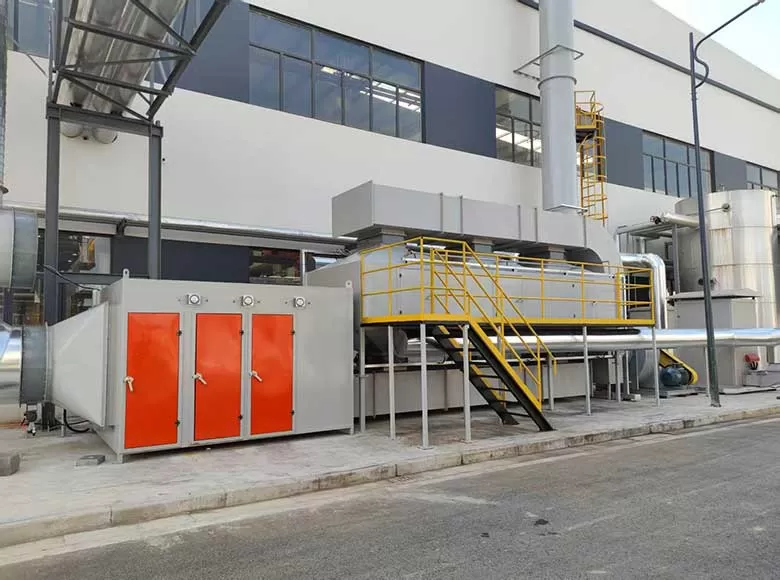
Activated carbon adsorption is one of the most widely used technologies for controlling low-to-moderate concentrations of volatile organic compounds. It is especially valuable when solvents can be recovered and reused, turning an environmental cost into a process benefit.
The working principle relies on the large internal surface area of activated carbon, typically ranging from 500 to 1500 square meters per gram. As VOC-laden air passes through a carbon bed, organic molecules attach to the pore surfaces through physical adsorption. Once the carbon reaches saturation, the bed is regenerated by steam or hot nitrogen, releasing concentrated VOC vapors that can be condensed and recovered.
System design considers airflow rate, VOC type, inlet concentration, temperature, and humidity. High humidity can reduce adsorption capacity, so preconditioning may be required. Multiple beds in parallel or series allow continuous operation while one bed is regenerating.
Common applications include painting and coating booths, printing, chemical storage, solvent handling, and semiconductor manufacturing. Activated carbon also removes odorous compounds, making it suitable for wastewater treatment plant exhaust and food processing facilities.
For safe operation, carbon beds must be protected against ignition by monitoring temperature and ensuring adequate flow distribution. Steam regeneration systems require proper condensate handling and solvent recovery infrastructure.
Zhongkang Environmental Engineering provides activated carbon adsorption systems designed for VOC recovery, deodorization, and emission compliance. We support system sizing, carbon selection, and regeneration integration.