Wet Electrostatic Precipitators: High-Efficiency Control of Fine Particles and Acid Mists
2026-06-24
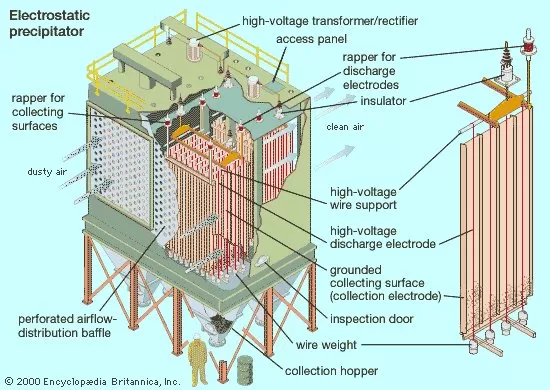
Wet electrostatic precipitators (WESPs) are advanced emission control devices that remove fine particulate matter, aerosols, and acid mists from saturated or high-humidity gas streams. Unlike dry ESPs, WESPs use water or chemical sprays to clean the collecting surfaces, making them ideal for sticky or corrosive pollutants.
The process begins with ionization. Discharge electrodes create a high-intensity corona that charges particles and droplets in the gas stream. These charged particles are then attracted to oppositely charged collection electrodes, where they form a liquid film that is continuously washed away. Because the collected material is removed as a liquid slurry, WESPs avoid re-entrainment and resist buildup.
WESPs can achieve removal efficiencies exceeding 99% for sub-micron particles, including oil mist, sulfuric acid aerosol, heavy metals, and tar. They are commonly used in power generation, waste incineration, metal processing, chemical production, and biomass boilers.
Design factors include gas velocity, residence time, electrode geometry, specific collection area, and wash-water chemistry. Materials must be corrosion-resistant, especially when handling sulfuric acid mist or halogenated gases. Power supply selection and rapping or flushing cycles also affect performance and reliability.
Because WESPs operate downstream of scrubbers or quenchers, they can serve as a final polishing stage to meet strict emission limits for opacity and particulate matter.
Zhongkang Environmental Engineering designs WESP systems integrated with upstream wet scrubbing and quenching equipment, delivering turnkey solutions for challenging particulate and aerosol applications.