RCO vs RTO: How to Choose a VOC Treatment System
2026-08-26
Why This Topic Matters
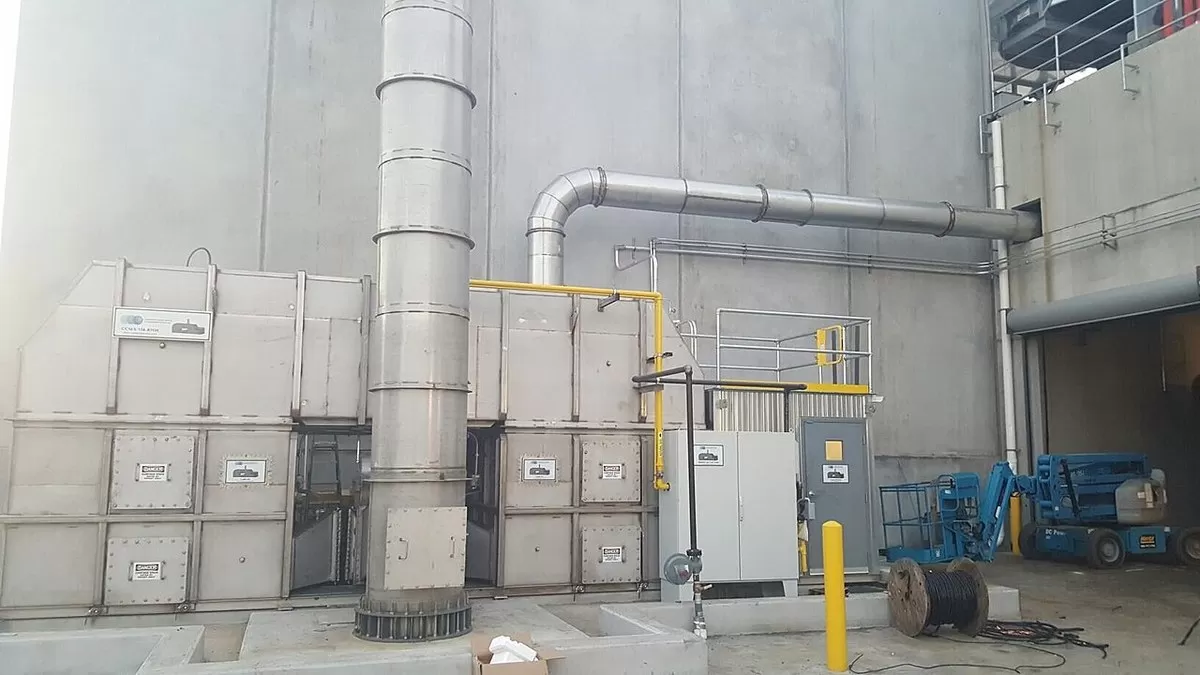
Two oxidizers can both treat VOCs and still have very different operating envelopes. RTO systems use high-temperature oxidation with regenerative heat recovery. RCO systems use a catalyst to support oxidation at a lower temperature and may be combined with adsorption or concentration. Neither label is universally ‘more energy efficient.’ Suitability depends on concentration, flow stability, compounds, catalyst poisons, particulate and aerosol loading, safety limits and production schedule.
Check the compounds
Halogens, sulfur, silicon, metals and other contaminants may influence catalyst selection or make catalytic treatment unsuitable.
Map concentration and flow
Average values are not enough; peaks, start-ups, shutdowns and product changes affect thermal balance and safety.
Plan pretreatment
Dust, oil mist and condensable material can foul beds, valves, heat-transfer media or catalysts.
Compare lifecycle duties
Fuel or electricity, catalyst replacement, media cleaning, pressure drop, maintenance labor and downtime belong in the same comparison.
What to Include in the RFQ
A technology review should begin with a representative VOC analysis, airflow profile, lower-explosive-limit assessment, humidity, temperature, aerosols, operating hours and emission target. Then model the expected range—not only a single design point. Pilot testing or additional sampling may be needed when the waste stream is uncertain.
Validation and Repeatability
Emission-control design should use representative process data and an agreed safety review. Record sampling conditions, production modes, peaks, contaminants, utility limits and the required outlet basis. If the process changes, reassess the treatment train. This protects both compliance and equipment life because a system designed for yesterday’s waste stream may not remain suitable after a new material or production recipe is introduced. Document the reassessment before the changed process returns to normal production, and train operators on new monitoring or maintenance duties.
Final Preproduction Check
Before release, confirm that the approved sample, test method and acceptance limits reflect production-scale conditions. Record changes to materials, settings or service environment, because repeatability depends on controlling the complete system rather than one isolated specification.
Conclusion
Zhongkang designs RTO, RCO and adsorption-based treatment systems for industrial VOC applications. Our role is to match the treatment train to the process data, facility constraints and compliance requirement. Share the VOC profile and operating range to compare RCO and RTO on the same basis.